Space is for curious minds
Understand what’s happening in space and discover it for yourself.
Learn the science behind the headlines, get to know a real mission, or discover your next sky event. No academic background needed.
What would you like to discover?
Pick a starting point for one small, achievable first step.
No sign-up to start. You can switch goals anytime; your choice stays on this browser.
Guided mini-courses
Learn toward a clear outcome
Short, ordered journeys built from published CosmoHub lessons. Start anywhere and move at your own pace.
Understand How Spaceflight Works
Explain how gravity, orbits, and rockets work together to reach space.
3 lessons · about 60 min
View journeyRead the Life Story of a Star
Describe how stars form, evolve, and leave behind extraordinary objects.
3 lessons · about 60 min
View journeyFind Worlds Beyond Our Sun
Understand how astronomers detect and study planets around other stars.
3 lessons · about 85 min
View journey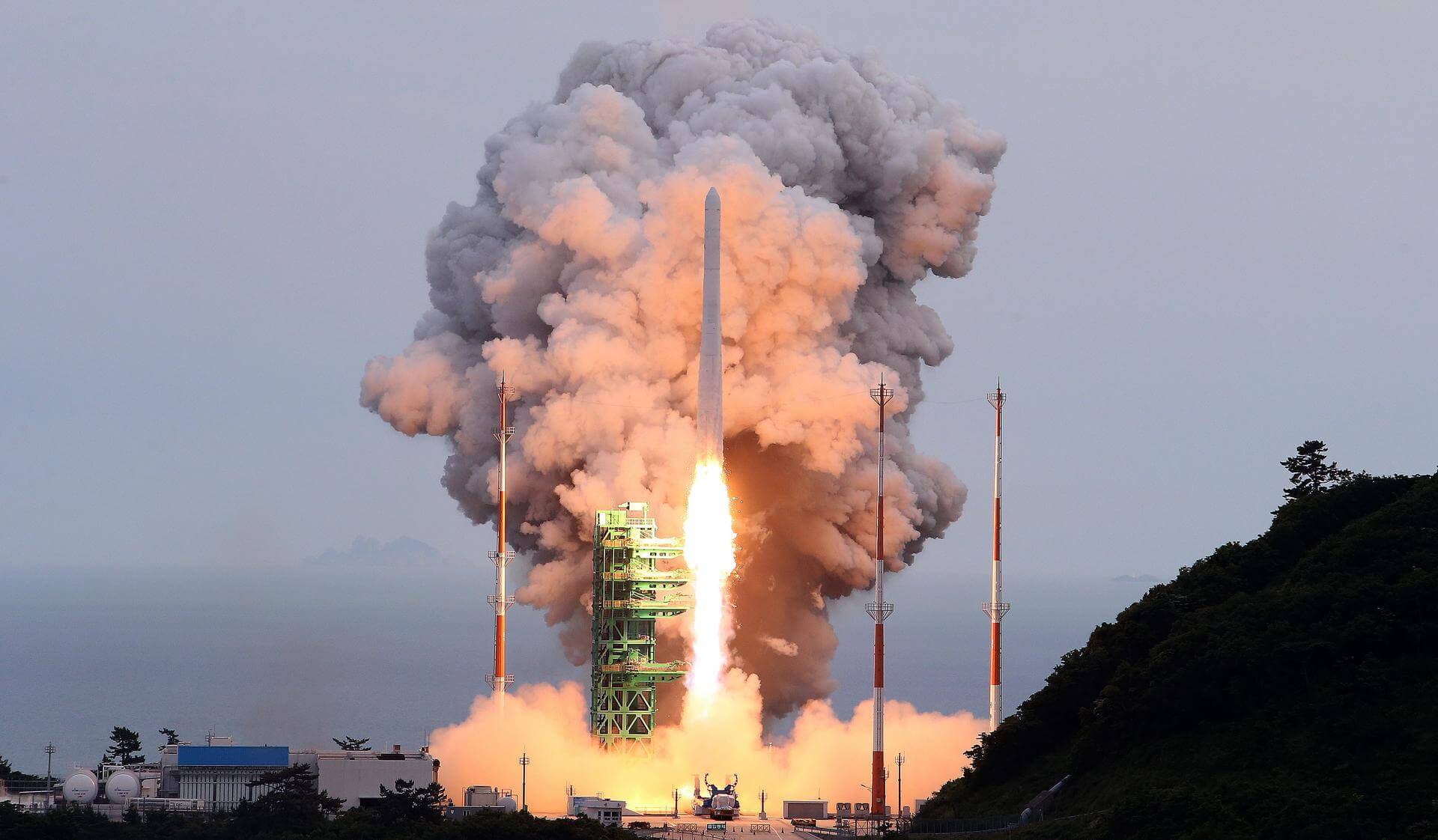

SDA Tranche 1 Transport Layer A
Falcon 9 Block 5
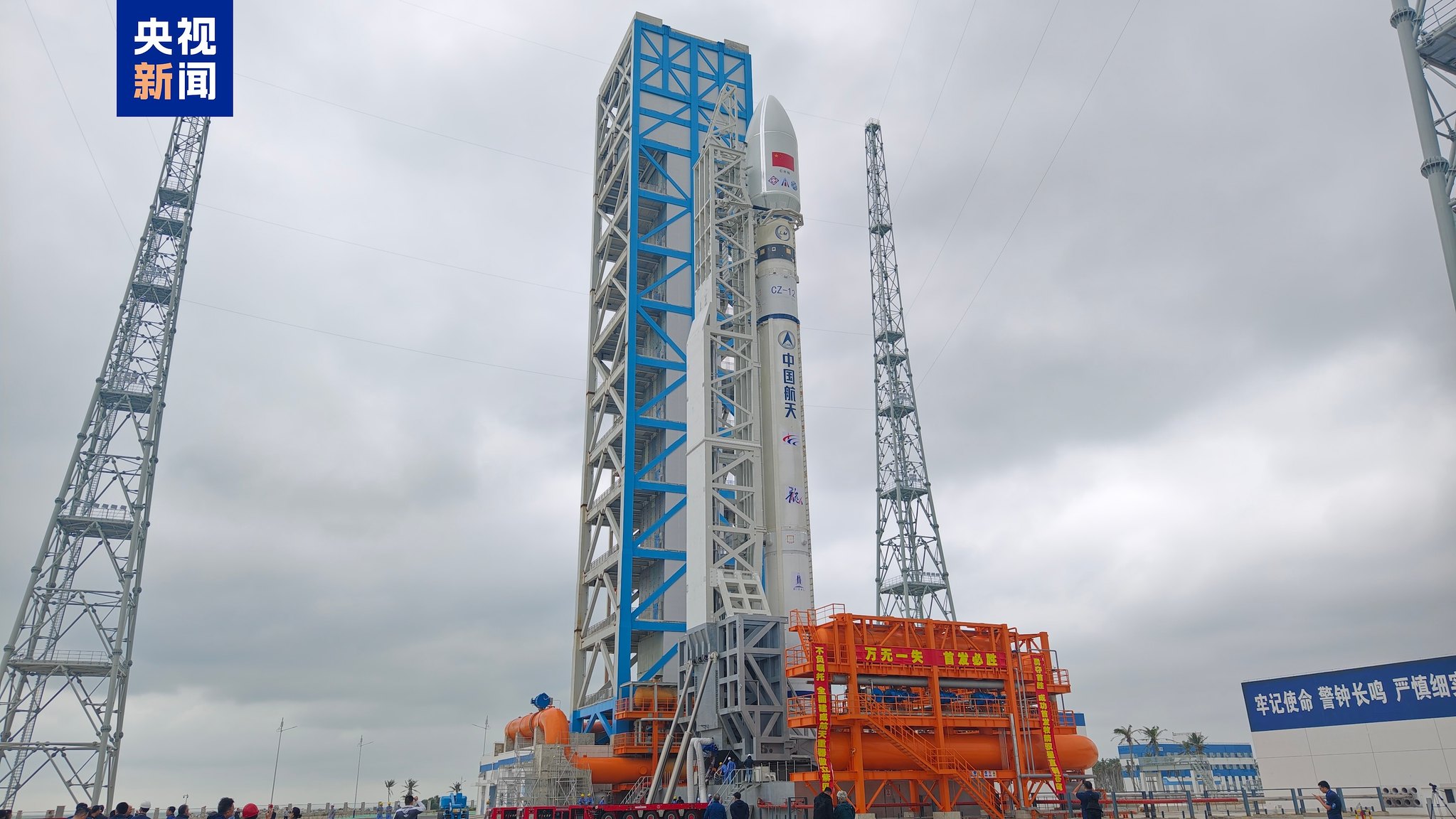
Unknown Payload
Long March 12

Starlink Group 15-25
Falcon 9 Block 5

Dragon CRS-2 SpX-35
Falcon 9 Block 5
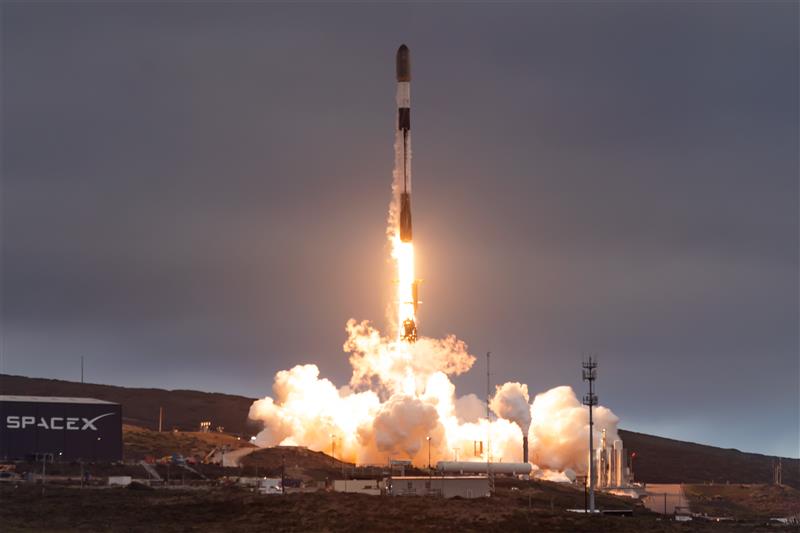
USSF-xxx ("TH-2")
Falcon 9 Block 5
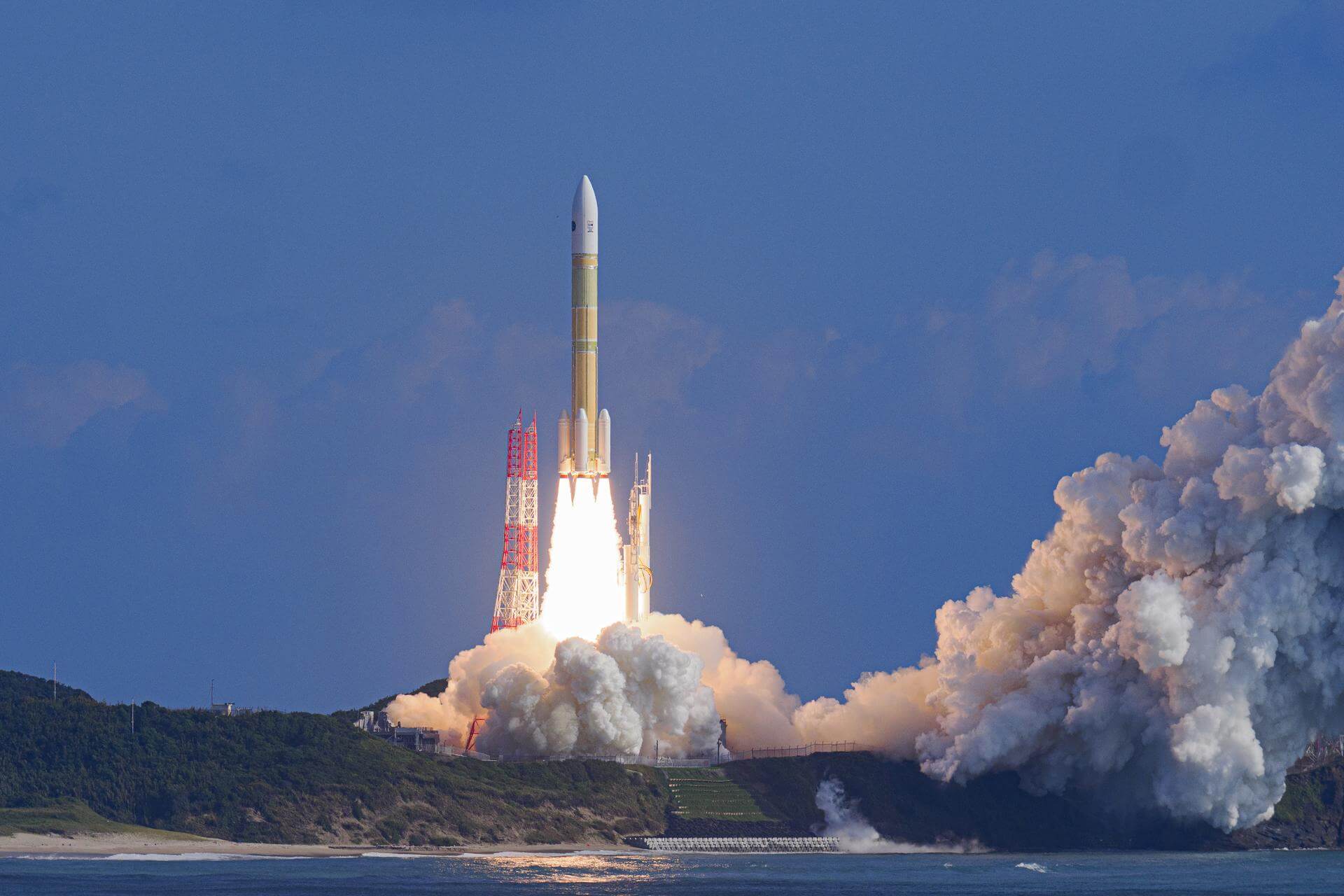
Martian Moon eXplorer (MMX)
H3-24
Artemis II
Humanity's return to the Moon · Orion "Integrity" · Safe splashdown in the Pacific
After 10 extraordinary days in space, the Artemis II crew safely returned to Earth on April 10, 2026, splashing down in the Pacific Ocean off the coast of San Diego. They traveled farther from Earth than any humans in history, completed a lunar flyby within 80 miles of the Moon's surface, and set new records that will echo for generations.
10 Days
Mission Duration
Planned
4,067 mi
Distance to Moon
Closest approach
252,756 mi
Max Distance
Record-breaking
SLS Block 1
Launch Vehicle
8.8M lbs thrust
Historic Firsts & Records
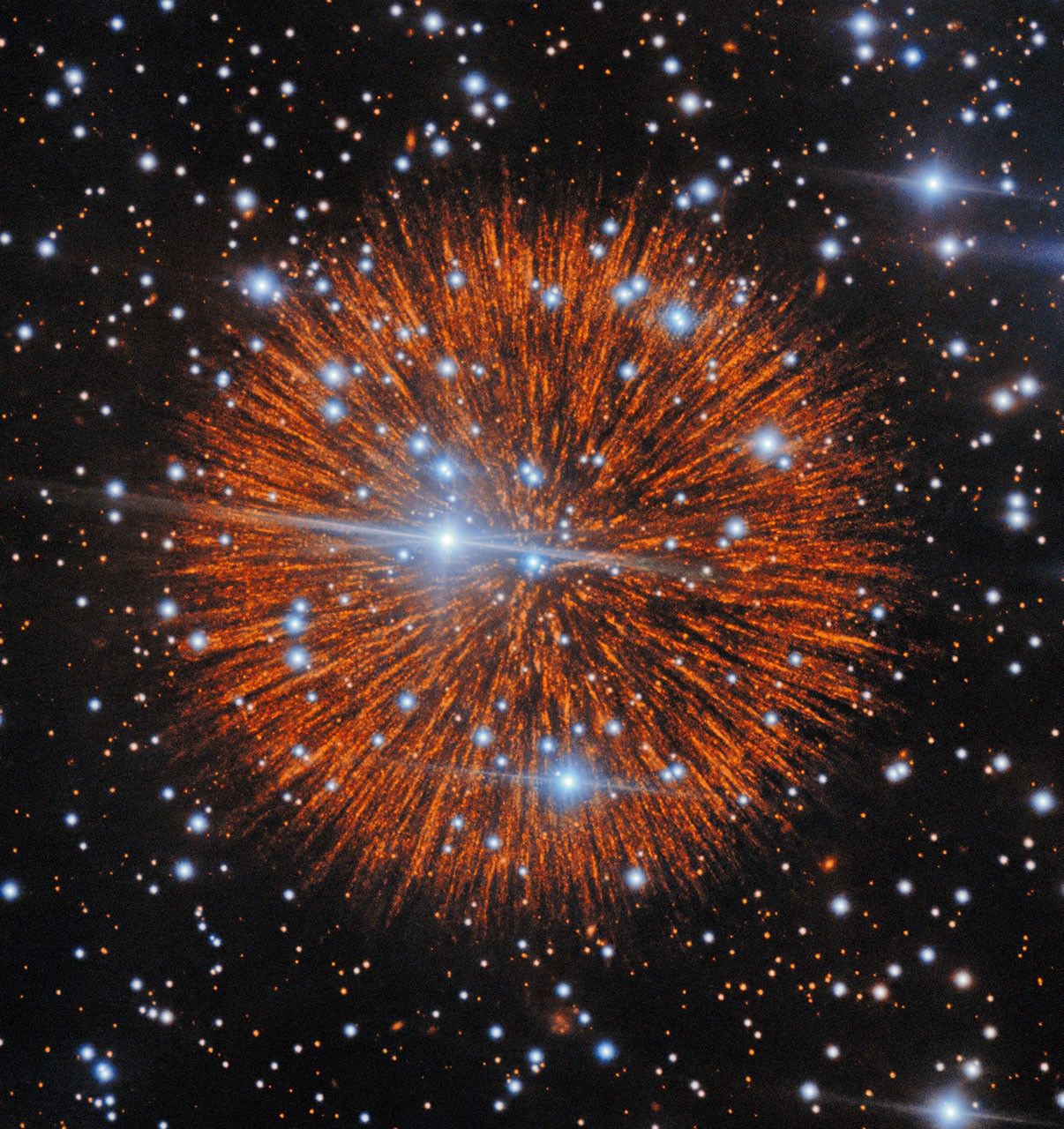
APOD: 2026 October 7 – Supernova Remnant Pa 30
APOD Science APOD APOD: 2026 October 7 –… Today’s APOD Archive Submissions Index Search Calendar RSS Education About Discuss APOD Astronomy Picture of the Day Discover the cosmos! Each day a different image or photograph of our fascinating universe is featured, along with a brief explanation written by a professional astronomer. Supernova Remnant Pa […]
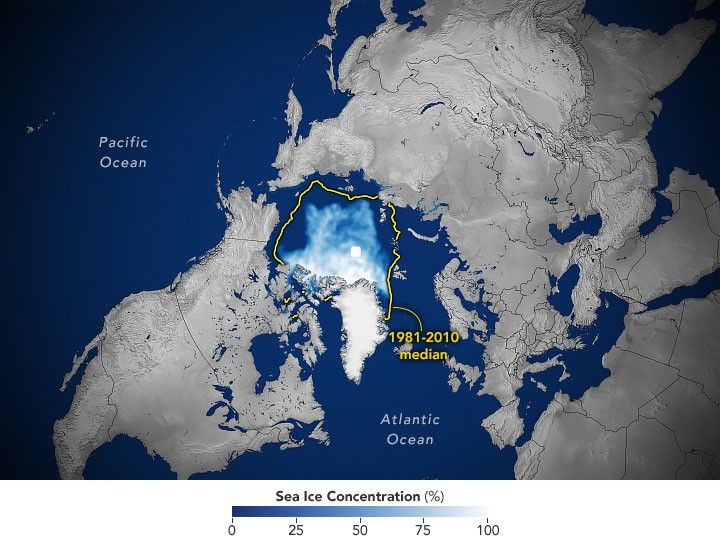
Arctic Sea Ice Shrinks to Its 2026 Minimum
Satellite records show Arctic sea ice covering less of the ocean in both winter and summer.

Crew-12 set to depart the ISS after eighth months in orbit
After eight months aboard the International Space Station, NASA and SpaceX’s Crew-12 mission is scheduled… The post Crew-12 set to depart the ISS after eighth months in orbit appeared first on NASASpaceFlight.com.
Crew-12 set to depart the ISS after eighth months in orbit
After eight months aboard the International Space Station, NASA and SpaceX’s Crew-12 mission is scheduled… The post Crew-12 set to depart the ISS after eighth months in orbit appeared first on NASASpaceFlight.com.
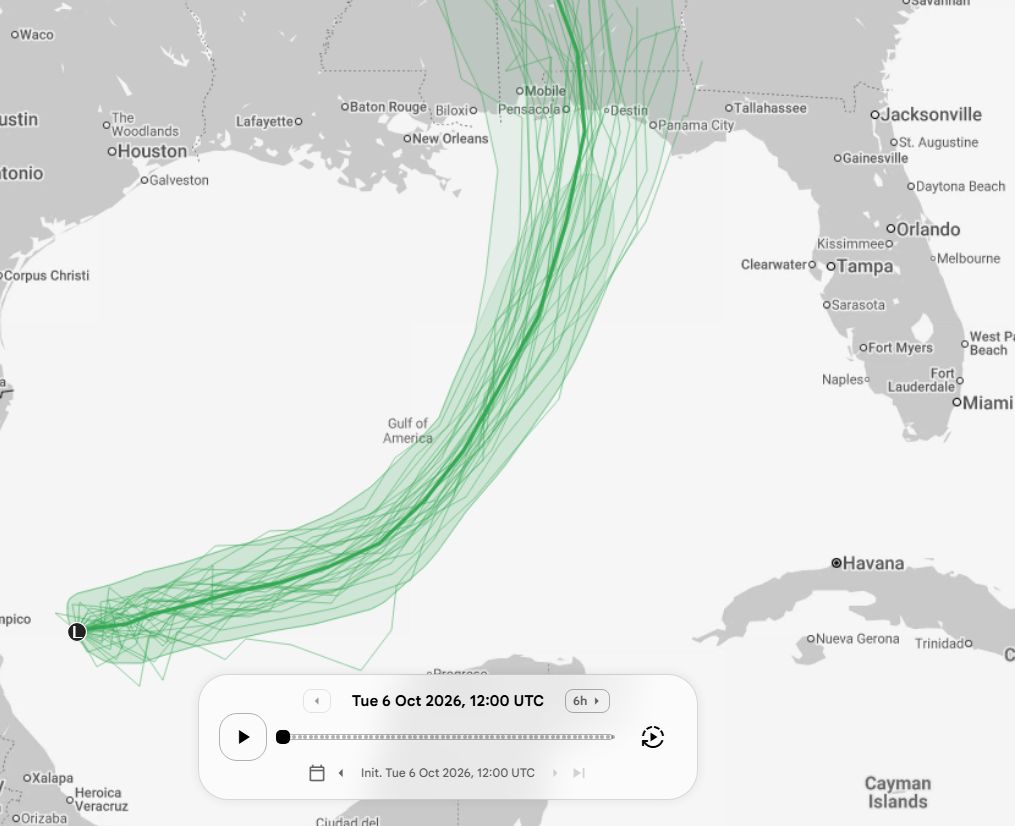
It looks like the Atlantic storm season may finally produce a hurricane
To date, this Atlantic tropics year has been exceptionally quiet.

Deposition Sciences, Inc. Expands Sunshade® Tape Offering with New 12″ × 30″ Format
Santa Rosa, CA — October 2026 — Deposition Sciences, Inc. (DSI), a leader in advanced thin film coatings, proudly announces the introduction of a new 12″ × 30″ format for […] The post Deposition Sciences, Inc. Expands Sunshade® Tape Offering with New 12″ × 30″ Format appeared first on SpaceNews.
Coronal Mass Ejections from the Young Sun: Deceleration-Powered Solar Energetic Particles as a Self-Extinguishing Forcing of the Early Earth
Olga A. Panasenco
At $\sim$3.9~Ga (stellar age $\sim$0.6~Gyr), the young Sun was far more magnetically active than today. It launched $\sim$$10^2$ large, fast coronal mass ejections (CMEs) per year into a denser, more magnetized wind. We follow these eruptions to Earth's atmosphere with a semi-analytic model chain. We find that a CME launched at $v_0\sim3\text{--}4\e{3}\unit{km\,s^{-1}}$ dissipates $ΔE_k\sim6\e{25}\unit{J}$ as it decelerates, an amount set only by its launch and final speeds. Diffusive shock acceleration converts $\sim$10\% of this energy into solar energetic particles (SEPs), whose deposition depth depends mainly on a spectral break energy $E_b$. We show that the stronger field moves the Alfvén surface, inside which the magnetic field controls the wind, from $\sim$10--25$\,\Rsun$ to $\sim$40--60$\,\Rsun$, so CME shocks deliver over ten times the particle fluence of flares. Because the forcing is powered by deceleration, it follows the measured wind history ($\dot M\propto t^{-2.3}$) and declines as $\sim t^{-3}$. It was $\sim$50--100 times stronger at 3.9~Ga than at 2~Ga and several hundred times today's level. This decline, strongest when the Sun was faintest, is what greenhouse solutions of the faint young Sun (FYS) problem usually impose by hand. The magnitude is small: SEP-driven $\mathrm{N_2O}$ adds at most a few $\unit{W\,m^{-2}}$ to a 20--40$\unit{W\,m^{-2}}$ greenhouse requirement, and only if a fractal organic haze extends its lifetime. Counting energy deposited below a survival level near 1~hPa, we find the particles fix $\sim$$4\e{10}$--$4\e{11}\unit{mol\,N\,yr^{-1}}$, which could supply prebiotic feedstock to surface pools. The largest uncertainties are $E_b$, the event rate, the survival depth, and the $\mathrm{N_2O}$ lifetime.
Complex Organic Molecules in Protostars with ALMA Spectral Surveys (COMPASS) -- IV. Methyl cyanide isotopologues toward BHR71-IRS1
P. Nazari, A. Coutens, J. K. Jørgensen, A. Belloche, A. L. Plunkett, S. Maret, D. Harsono, M. N. Drozdovskaya, J. -E. Lee, F. Cruz-Sáenz de Miera, J. Ferrer Asensio, M. L. R. van 't Hoff, J. -H. Jeong, Á Kóspál, B. A. McGuire, S. Spezzano, Y. -L. Yang, H. -S. Yun, S. Zeng
Methyl cyanide is one of the most abundant nitrogen-bearing complex organic molecules observed in the gas phase around low- and high-mass protostars. However, very few observations exist with a broad enough frequency coverage and sufficiently high sensitivity to systematically characterize its minor isotopologues toward such regions. We add to this number by analyzing data toward BHR71-IRS1 taken as part of the Complex Organic Molecules in Protostars with ALMA Spectral Surveys (COMPASS) Large Program over a ~33 GHz frequency range. We studied as many isotopologues of methyl cyanide as possible toward BHR71-IRS1. We found the column densities and excitation temperatures via spectral fitting and assuming local thermodynamic equilibrium. We then compared the derived column density ratios with those toward IRAS 16293-2422 A and B, V883 Ori, G31.41+0.31, and Sgr B2(N2b). We detect CH3CN, CH3CN $v_8$=1, 13-CH3CN, CH3-13-CN, CH3C-15-N, CH2DCN, and CHD2CN. The column density ratio of 13-CH3CN/CH3-13-CN is around unity, in agreement with previous observations. The CH2DCN/CH3CN ratios are similar for all the low-mass objects but are ~1 order of magnitude higher than those toward Sgr B2(N2b). This could be due to a warmer pre-stellar phase or a different formation timescale of Sgr B2(N2b). The D/H ratios found from methyl cyanide isotopologues agree well with those of methanol toward BHR71-IRS1, likely pointing to the formation and deuteration of methyl cyanide in a similar star-formation phase as methanol (i.e., the pre-stellar phase). We find an increase in the methyl cyanide D/H ratios with the number of deuterium atoms, which suggests that the deuterated isotopologues may form later in the pre-stellar phase. Future COMPASS studies will increase the sample size of low-mass systems with methyl cyanide analysis and potentially examine some of the trends observed here statistically.
Mitigating prior-volume effects in galaxy clustering by adopting Mpc over Mpc/h units
Andrea Pezzotta, Alejandro Pérez-Fernández, Giosuè Gambardella, Ariel G. Sánchez, Alexander Eggemeier, Martin Crocce, Benjamin Camacho-Quevedo
We investigate prior-volume effects in Bayesian analyses of galaxy clustering based on state-of-the-art models, such as the EFT and the VDG$_\infty$ model. We show that these effects are largely driven by imposing priors on the model parameters defined in ${\rm Mpc}/h$ units, thereby introducing a spurious correlation with the Hubble parameter $h$, and that they can be strongly mitigated by adopting a more physically motivated formulation in ${\rm Mpc}$ units. We test this approach using a set of synthetic data vectors designed to reproduce the clustering signal expected in a Stage-IV survey across a range of cosmological models, including $Λ$CDM, $K$CDM, $w$CDM, and $w_0w_a$CDM. We find that the resulting constraints are largely free from shifts induced during the marginalisation process, even in the challenging $w_0w_a$CDM runs, reducing discrepancies with the fiducial values from several standard deviations to well within $1σ$. The performance of this approach is comparable to that of alternative mitigation strategies, such as the adoption of invariant priors or the reparametrisation of nuisance parameters in terms of growth and geometrical amplitudes. For the latter, we find that using $σ_{12}$ in place of the commonly adopted $σ_8$ to describe the amplitude of density fluctuations improves the performance of the reparametrisation technique, even at high redshifts, where constraints on the dark-energy equation of state are weaker. We further show that these conclusions hold with the inclusion of additional BAO constraints, and for data sets with reduced statistical power. These results add to the benefits of working with ${\rm Mpc}$ units, avoiding an explicit dependence on $h$, with direct relevance for the analyses of Stage-IV galaxy surveys.

NASA Science
🌟 Did you know that the glowing "aurora rings" we see in the sky are actually giant, circular crowns encircling Earth’s magnetic poles? Because these ovals are so massive, we can only see their full, dancing glory from space! **Mind-blowing fact:** These auroras are caused by the Sun’s "wind" slamming into our magnetic field, and studying them helps us protect our modern power grids and astronauts from intense solar storms. It’s like watching a cosmic shield in action!
NASA Science
🌟 Did you know that the famous Sombrero Galaxy is actually a cosmic crash survivor? While it looks like a simple, elegant hat from afar, deep images reveal a "hairy" halo of stars and mysterious rings, proving it was formed by the violent collisions of smaller galaxies long ago! Mind-blowing fact: The light we see from this galaxy today left its source 30 million years ago, meaning we are looking back in time to an era before humans even walked the Earth! 🌌✨
Featured Posts
In-depth articles and mission trackers


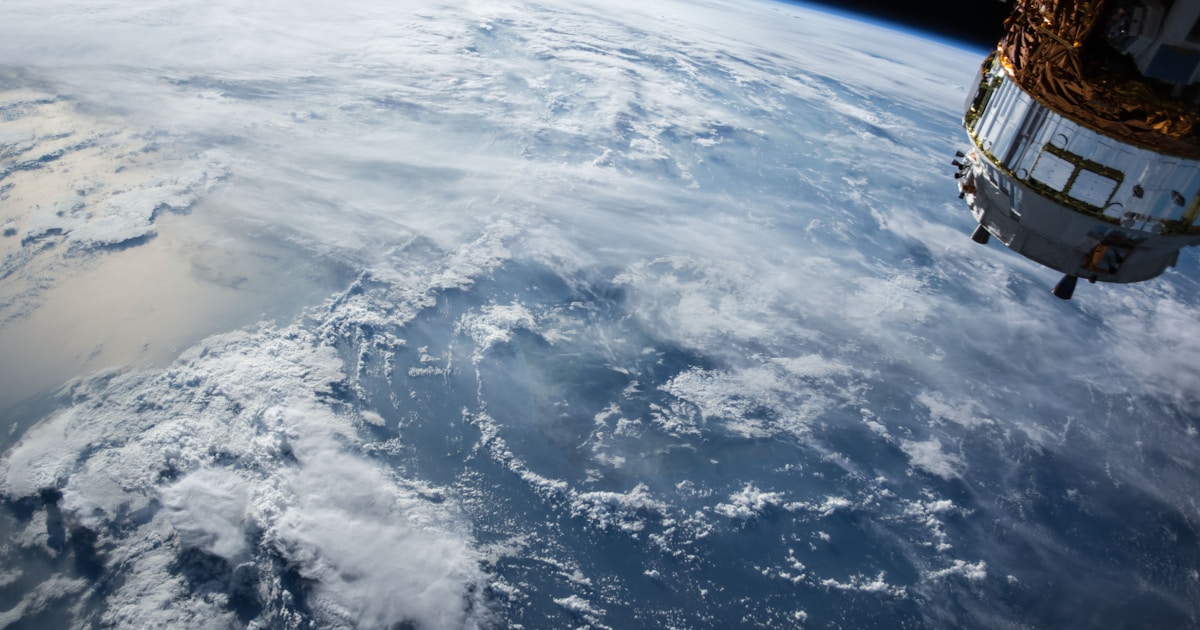
Interactive Globe
Track satellites and debris in real-time 3D
Academy
Master astrophysics with structured courses
Paper Discovery
Search arXiv and NASA ADS with AI explanations
Citizen Science
Contribute to real research projects