Space is for curious minds
Understand what’s happening in space and discover it for yourself.
Learn the science behind the headlines, get to know a real mission, or discover your next sky event. No academic background needed.
What would you like to discover?
Pick a starting point for one small, achievable first step.
No sign-up to start. You can switch goals anytime; your choice stays on this browser.
Guided mini-courses
Learn toward a clear outcome
Short, ordered journeys built from published CosmoHub lessons. Start anywhere and move at your own pace.
Understand How Spaceflight Works
Explain how gravity, orbits, and rockets work together to reach space.
3 lessons · about 60 min
View journeyRead the Life Story of a Star
Describe how stars form, evolve, and leave behind extraordinary objects.
3 lessons · about 60 min
View journeyFind Worlds Beyond Our Sun
Understand how astronomers detect and study planets around other stars.
3 lessons · about 85 min
View journey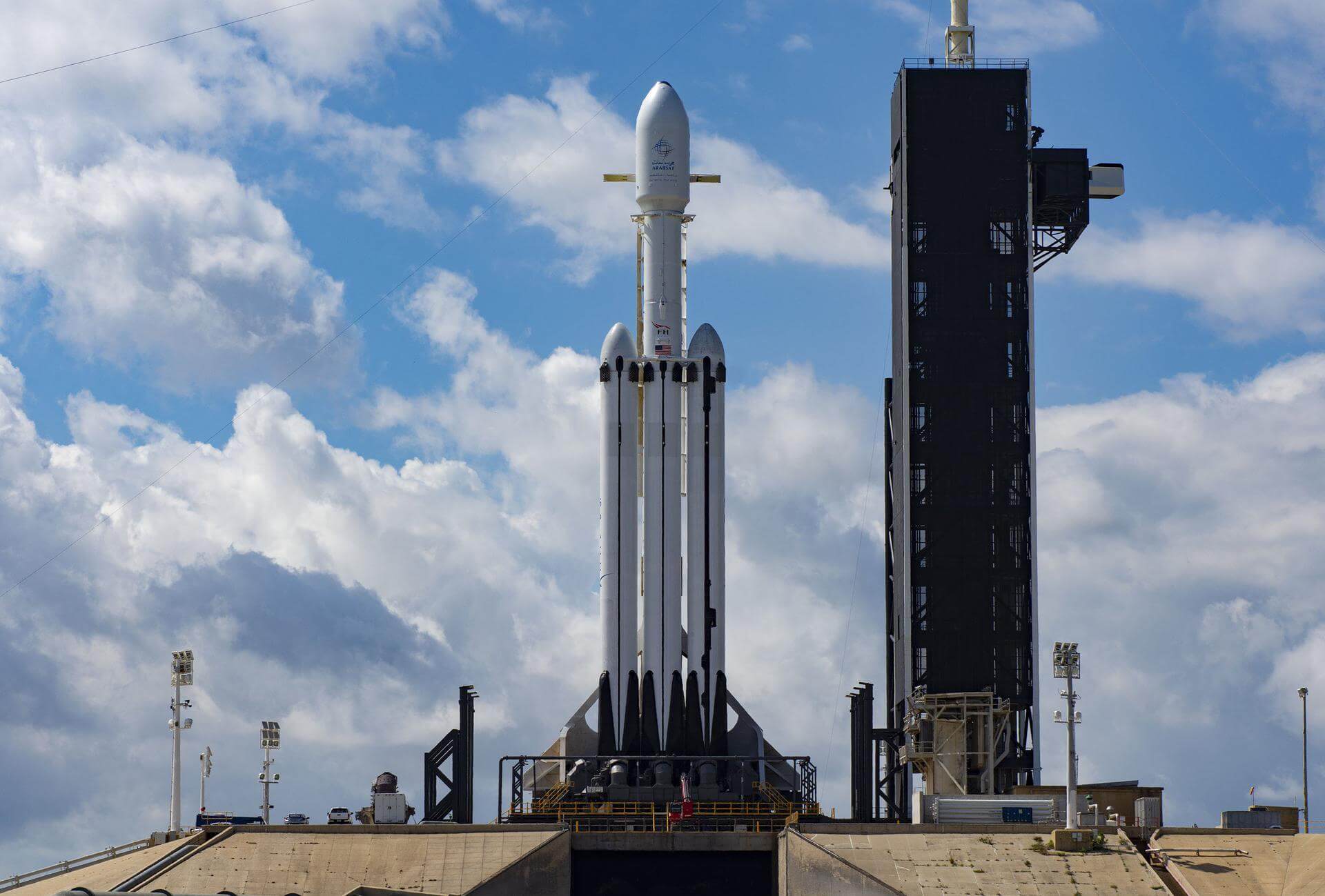
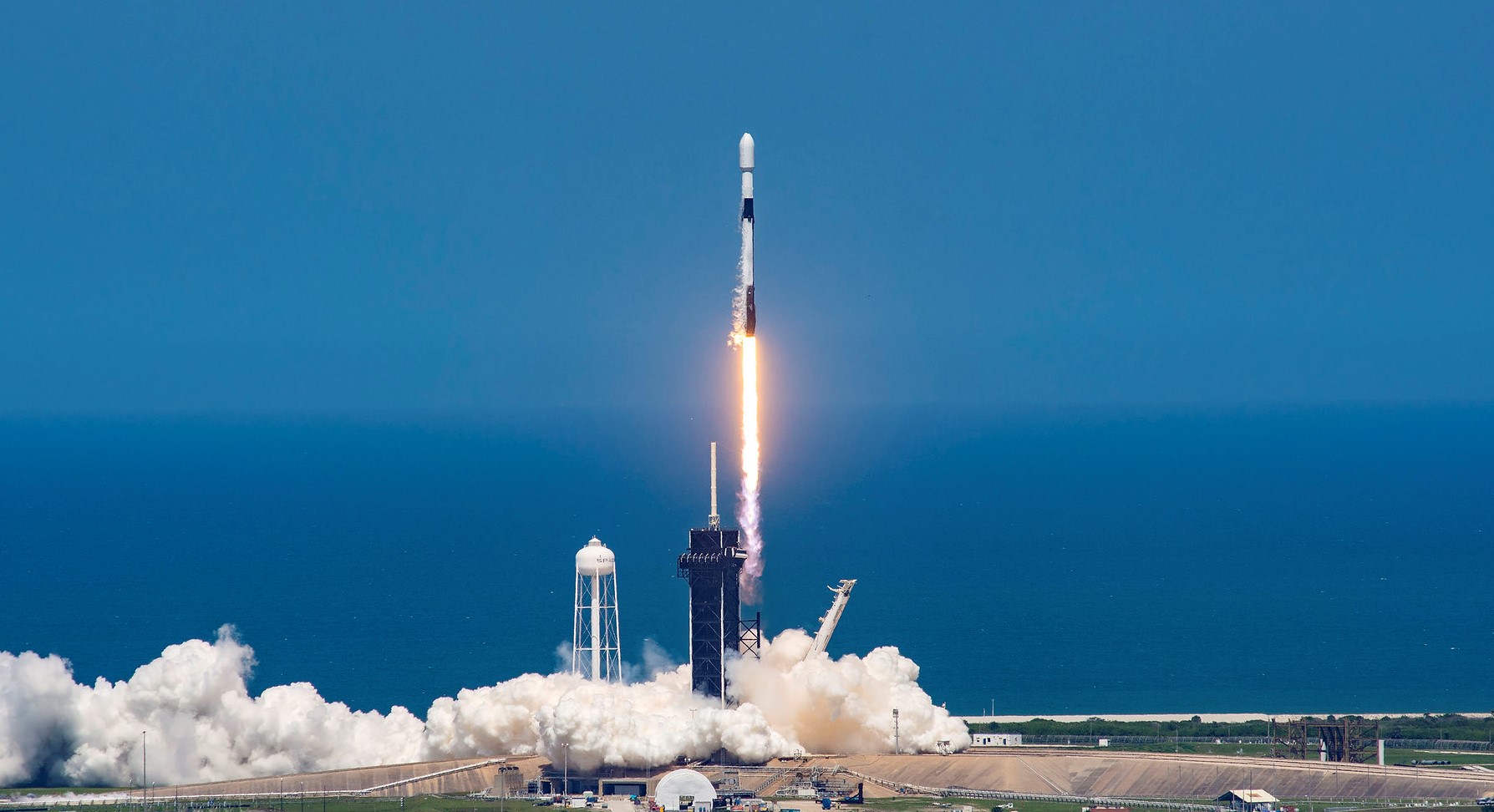
SDA Tranche 1 Transport Layer A
Falcon 9 Block 5
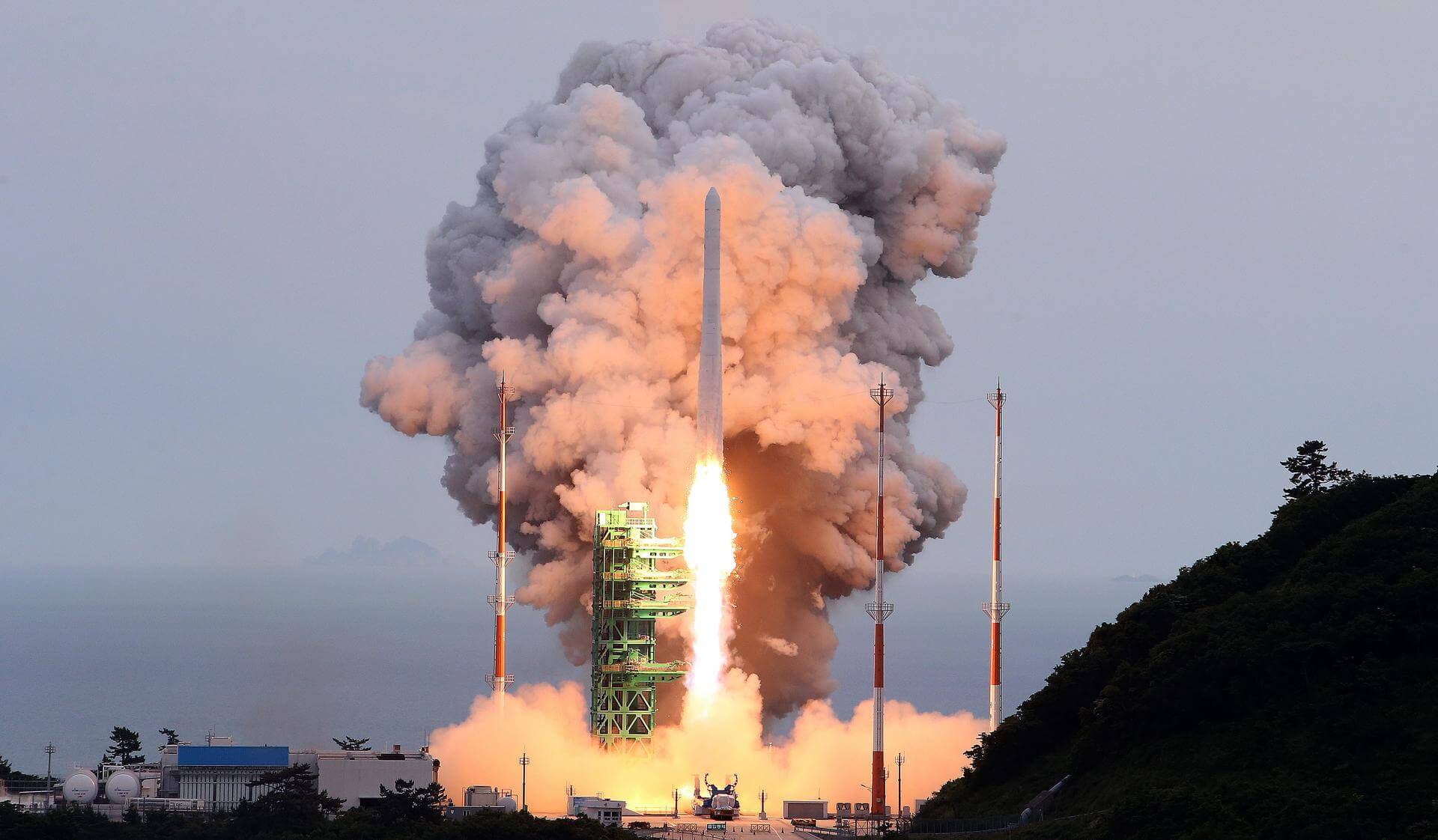
NeonSat-2 to 6
Nuri
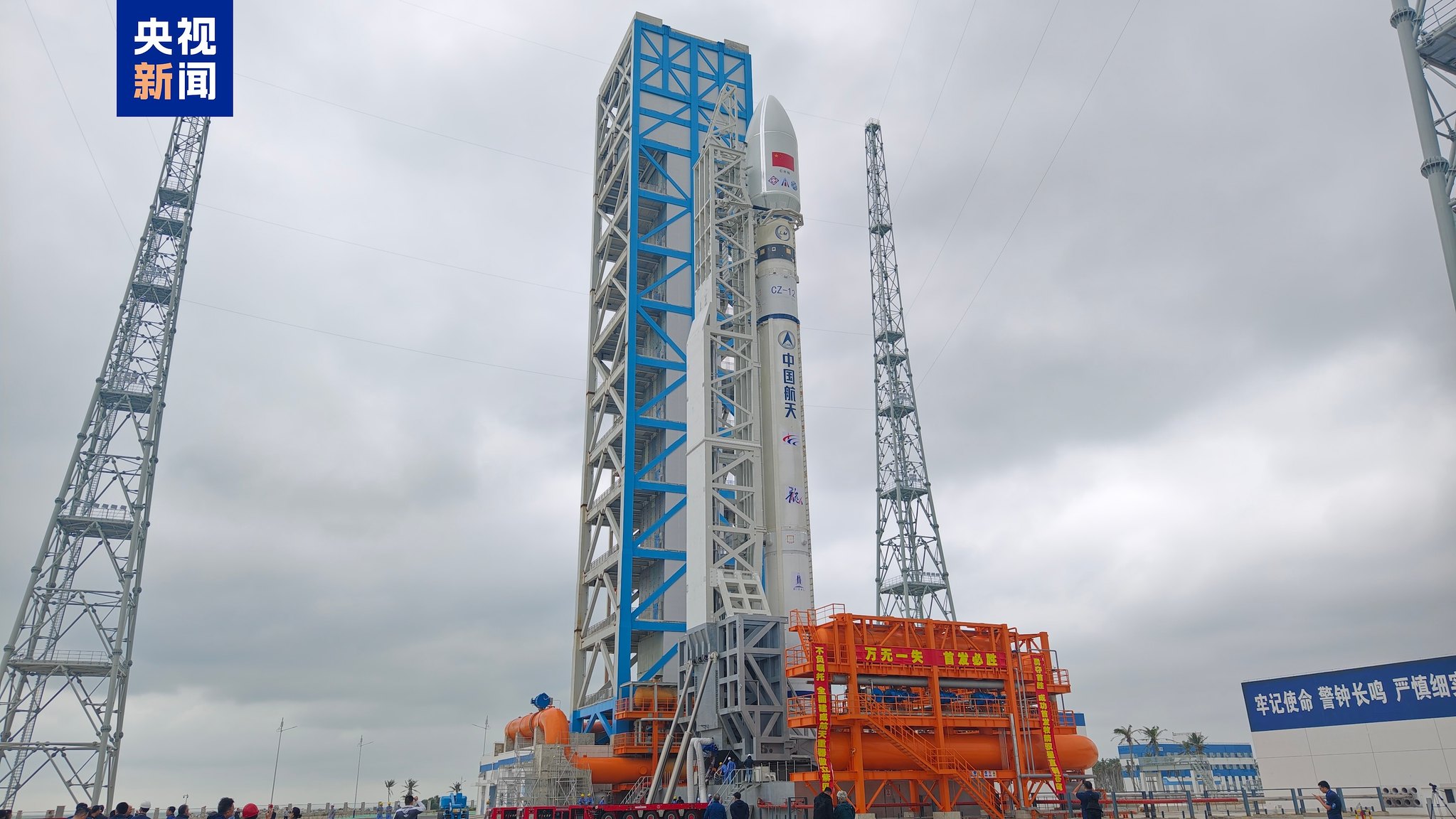
Unknown Payload
Long March 12

Starlink Group 15-25
Falcon 9 Block 5
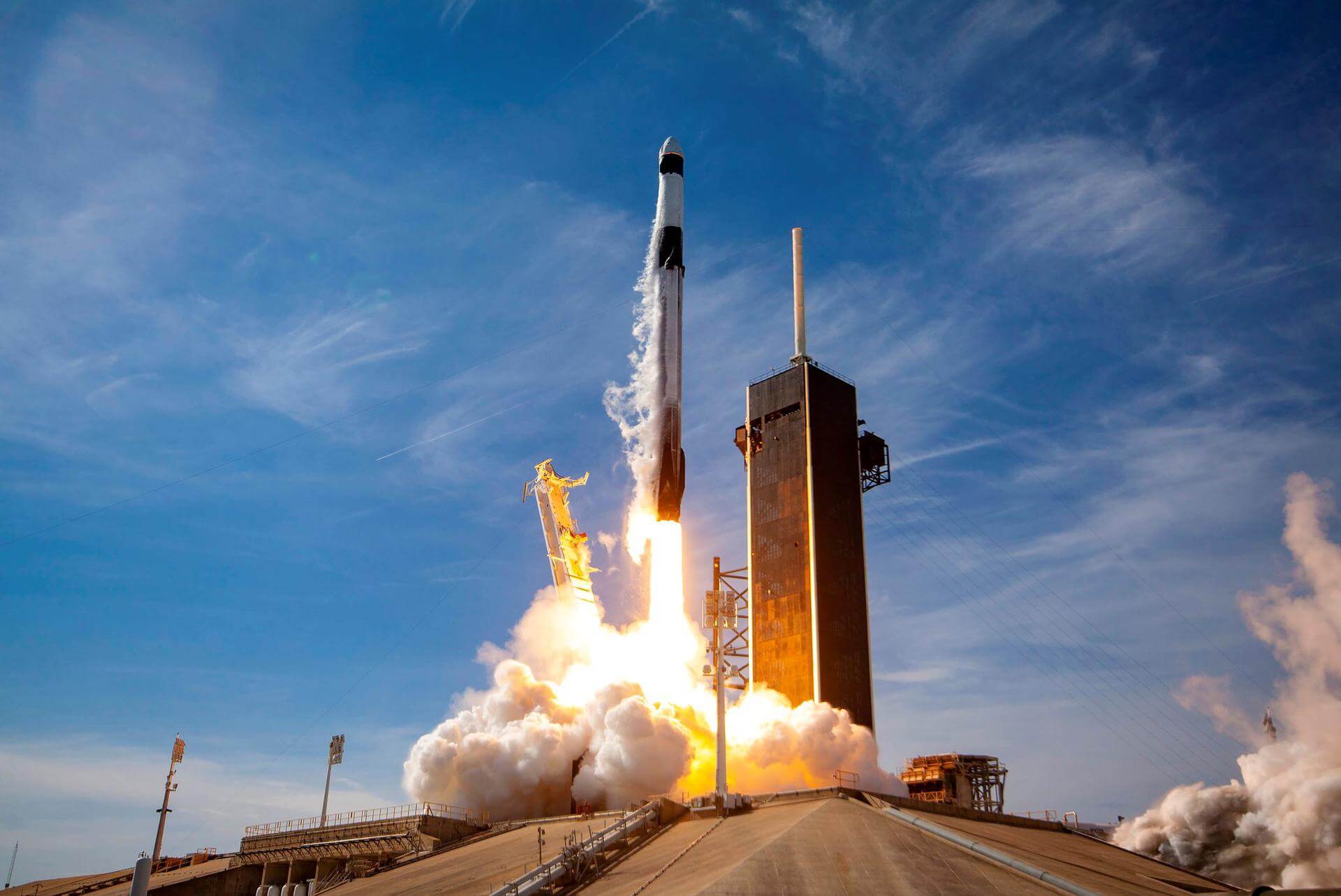
Dragon CRS-2 SpX-35
Falcon 9 Block 5
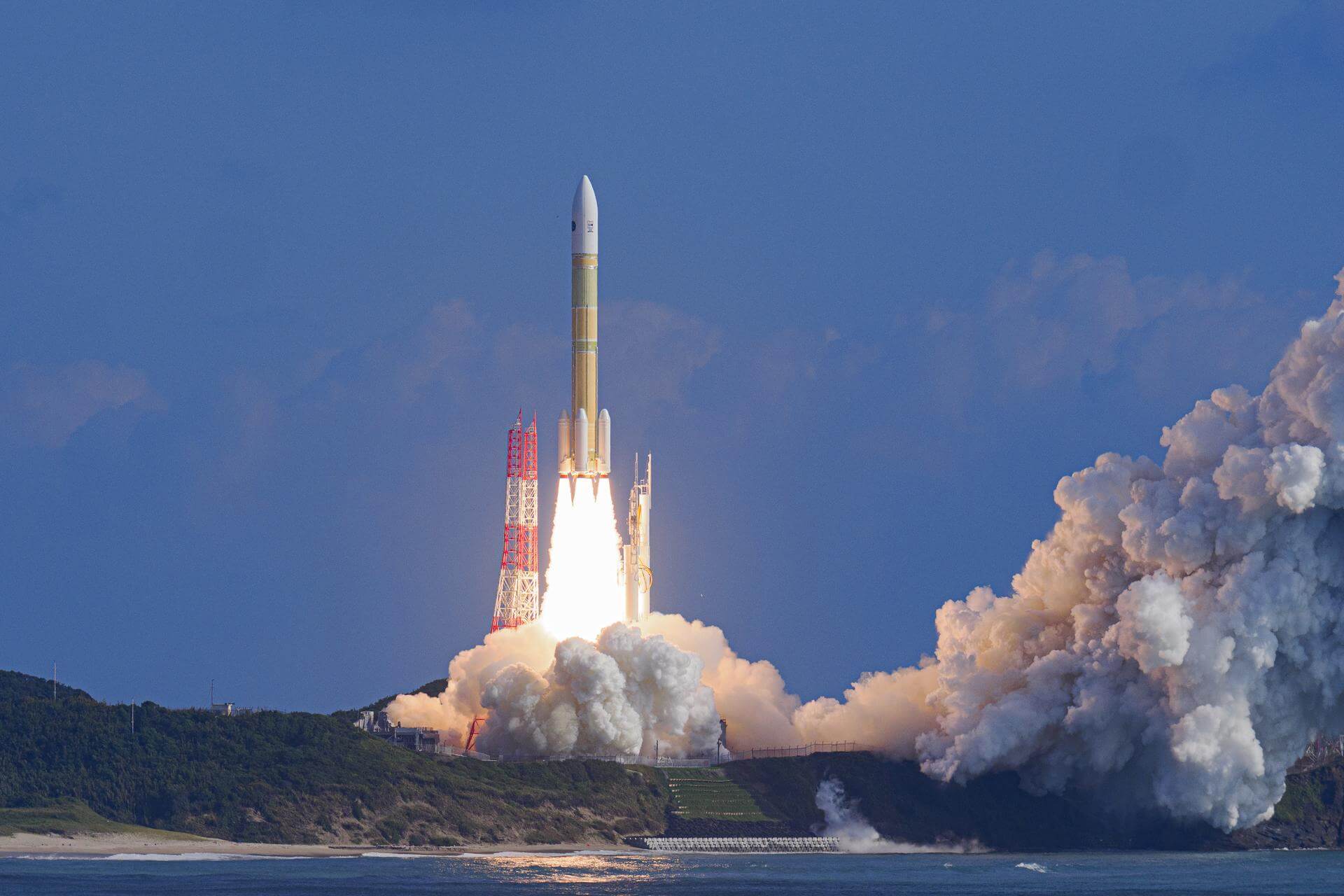
Martian Moon eXplorer (MMX)
H3-24
Artemis II
Humanity's return to the Moon · Orion "Integrity" · Safe splashdown in the Pacific
After 10 extraordinary days in space, the Artemis II crew safely returned to Earth on April 10, 2026, splashing down in the Pacific Ocean off the coast of San Diego. They traveled farther from Earth than any humans in history, completed a lunar flyby within 80 miles of the Moon's surface, and set new records that will echo for generations.
10 Days
Mission Duration
Planned
4,067 mi
Distance to Moon
Closest approach
252,756 mi
Max Distance
Record-breaking
SLS Block 1
Launch Vehicle
8.8M lbs thrust
Historic Firsts & Records
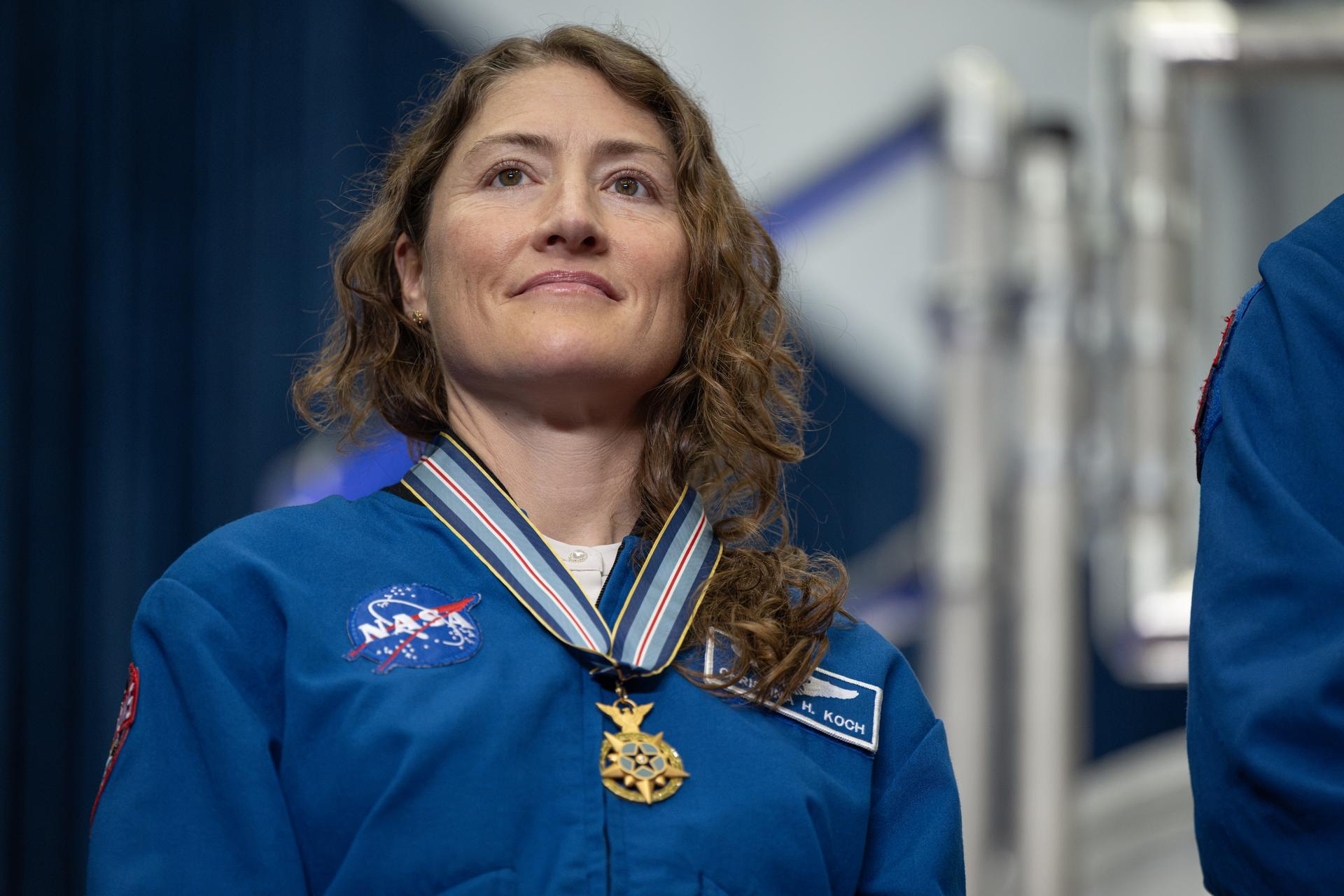
NASA Astronaut Christina Koch to Join NFL Fans in Philadelphia
As part of NASA’s ongoing Inspiration Tour, NASA astronaut Christina Koch will highlight America’s strengths in space exploration and aeronautics innovation at the Philadelphia Eagles vs. Los Angeles Rams game in Philadelphia on Sunday, Oct. 4. A self-proclaimed Philadelphia sports fan, Koch is an explorer and engineer who spent a total of 338 days in […]

Heading Home: NASA’s SpaceX Crew-12 Concludes Station Science Mission
NASA’s SpaceX Crew-12 mission is ending, with the crew scheduled to return in early October. NASA astronauts Jessica Meir and Jack Hathaway, ESA (European Space Agency) astronaut Sophie Adenot, and Roscosmos cosmonaut Andrey Fedyaev will head home from the International Space Station after supporting research that benefits life on Earth and prepares humans for missions […]
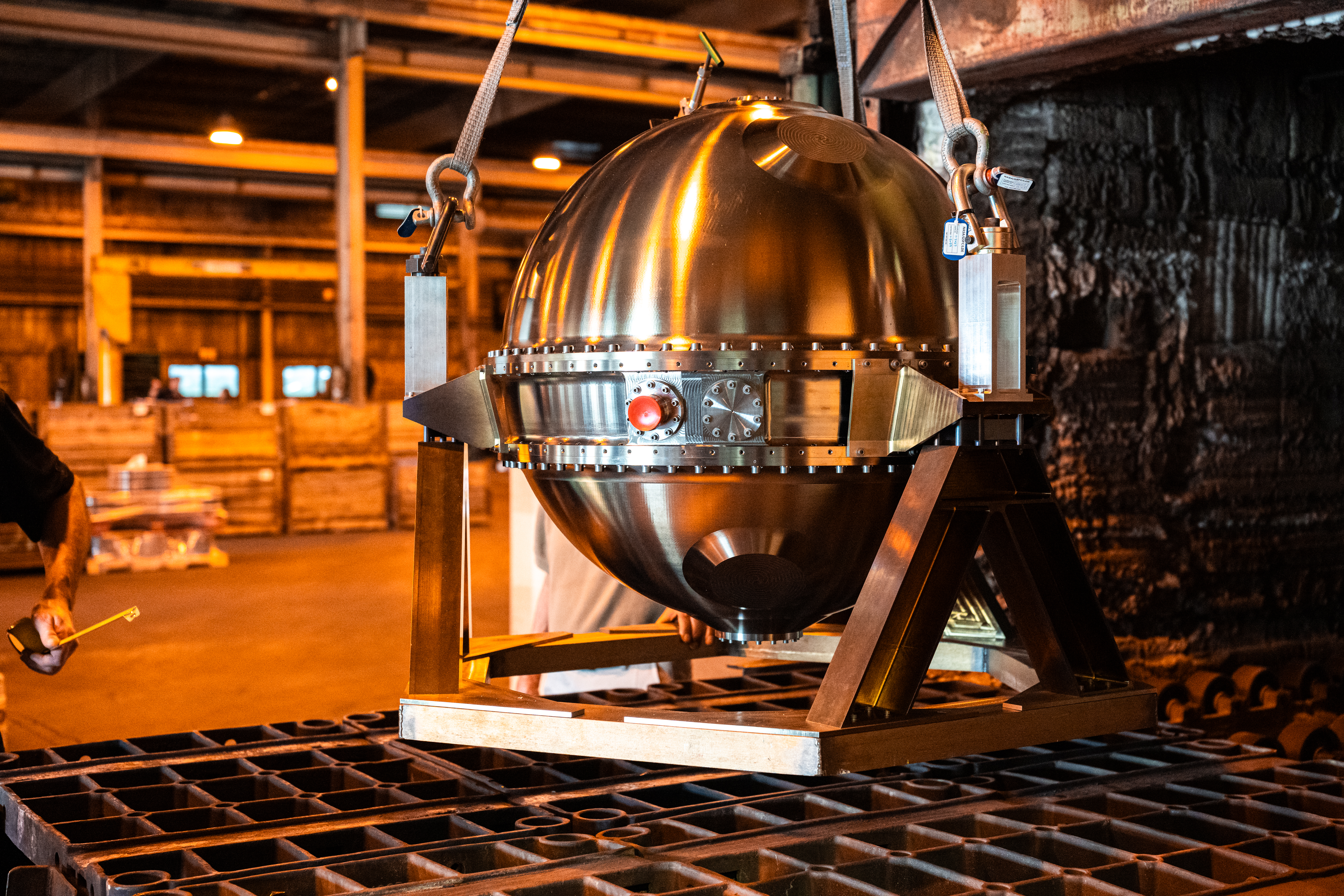
NASA’s DAVINCI Probe Can Stand the Heat
The engineering development unit for NASA’s DAVINCI (Deep Atmosphere Venus Investigation of Noble gases, Chemistry, and Imaging) probe is photographed prior to a major thermal evaluation. The DAVINCI team put the yoga ball-sized vessel into a ceramic-lined chamber with heat-scorched walls and ratcheted up the temperature to 869 F, or 465 C, over the course […]
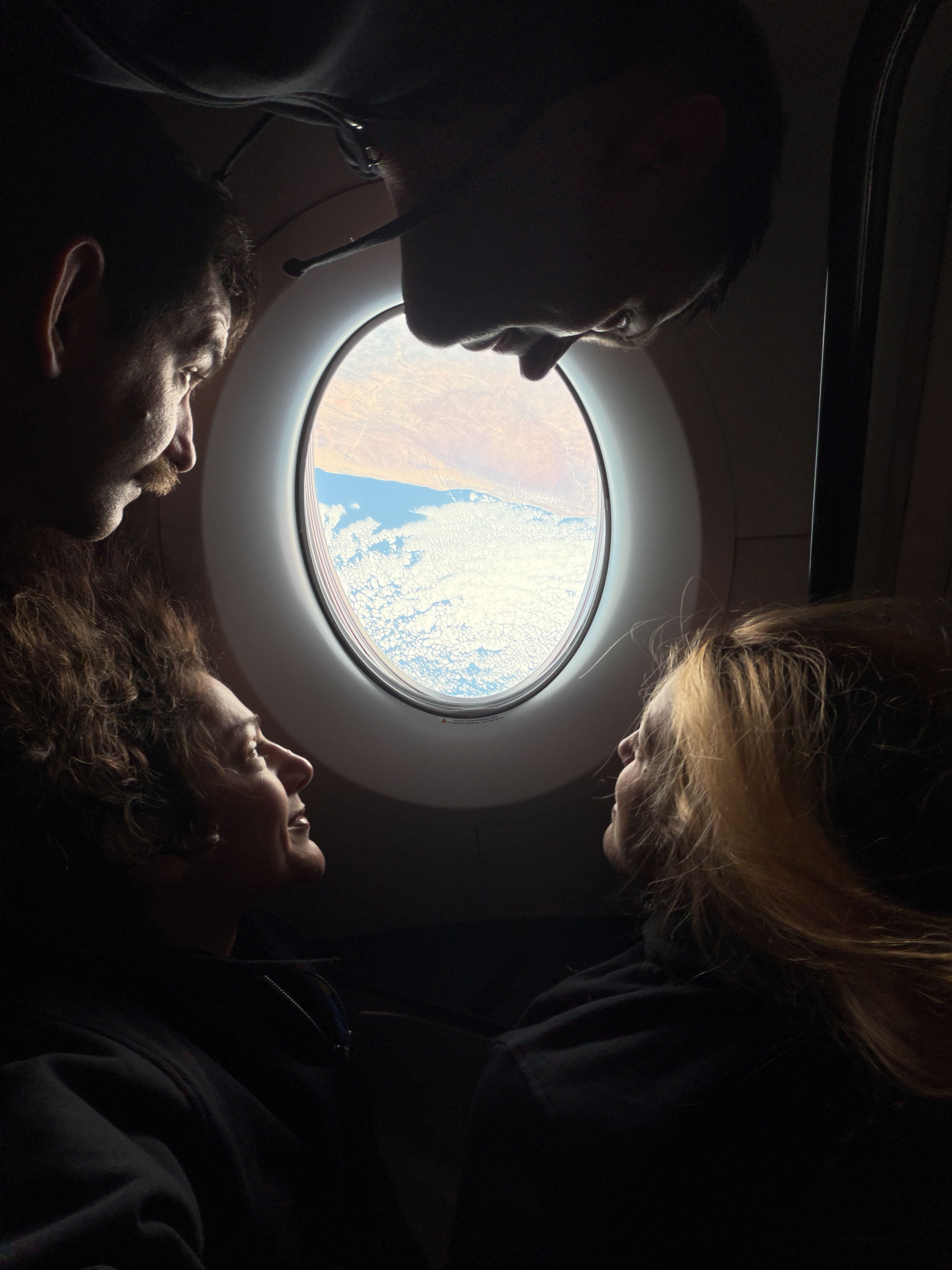
Heading Home: NASA’s SpaceX Crew-12 Concludes Station Science Mission
NASA’s SpaceX Crew-12 mission is ending, with the crew scheduled to return in early October. NASA astronauts Jessica Meir and Jack Hathaway, ESA (European Space Agency) astronaut Sophie Adenot, and Roscosmos cosmonaut Andrey Fedyaev will head home from the International Space Station after supporting research that benefits life on Earth and prepares humans for missions […]
NASA Astronaut Christina Koch to Join NFL Fans in Philadelphia
As part of NASA’s ongoing Inspiration Tour, NASA astronaut Christina Koch will highlight America’s strengths in space exploration and aeronautics innovation at the Philadelphia Eagles vs. Los Angeles Rams game in Philadelphia on Sunday, Oct. 4. A self-proclaimed Philadelphia sports fan, Koch is an explorer and engineer who spent a total of 338 days in […]
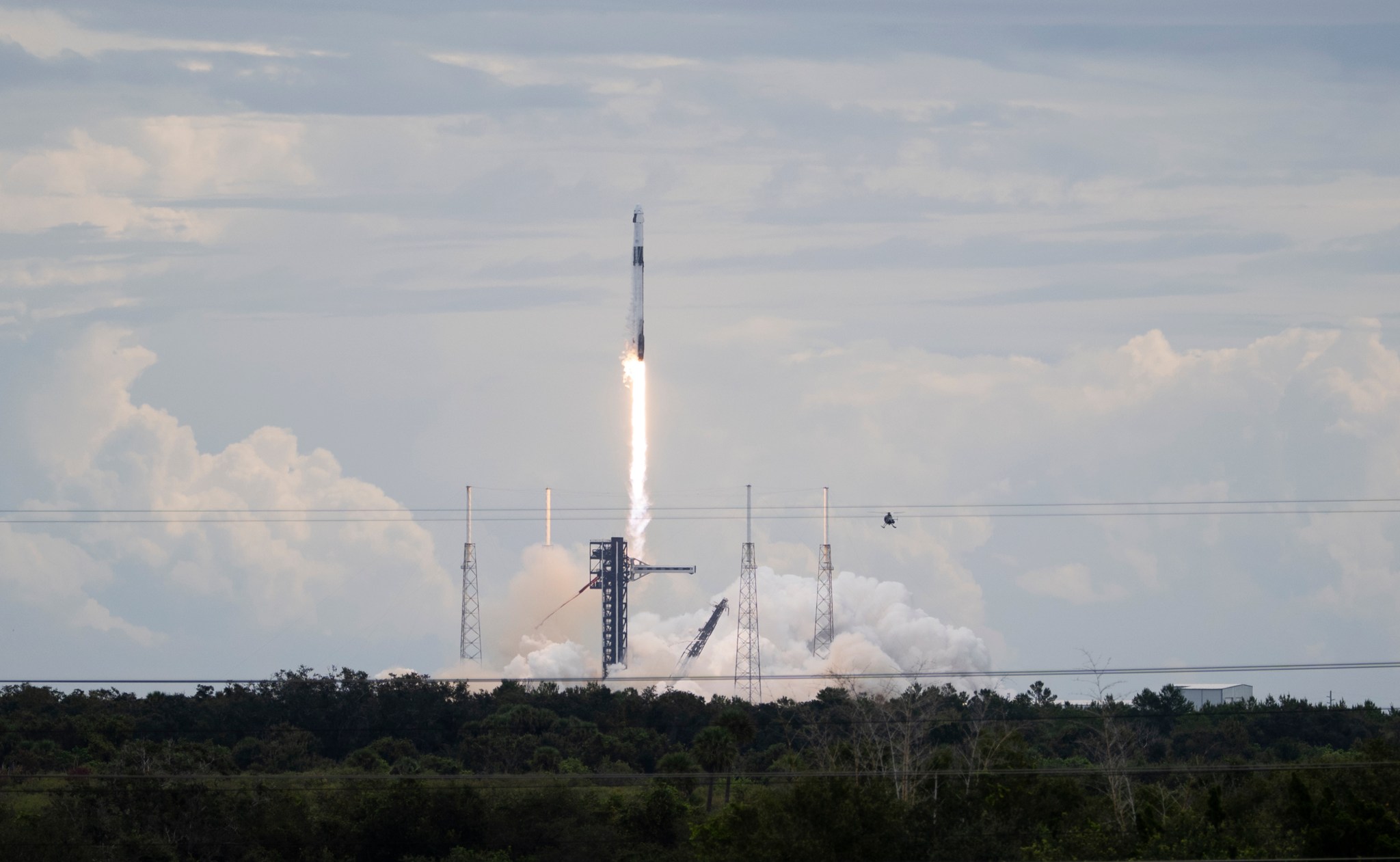
NASA’s SpaceX Crew-13 Launches to International Space Station
Four crew members of NASA’s SpaceX Crew-13 mission launched at 11:10 a.m. EDT Thursday from Space Launch Complex 40 at Cape Canaveral Space Force Station in Florida for a science expedition aboard the International Space Station. “Crew-13 is another demonstration of America’s unmatched capability in human spaceflight and the strength of our commercial partnerships,” said […]
Probing the Reionization History and Bubble Sizes with JWST Lyman-$α$ Fraction Measurements
Aritra Kundu, Adam Lidz, Guochao Sun
Recent James Webb Space Telescope (JWST) measurements quantify the fraction of ultraviolet-selected galaxies showing detectable Lyman-alpha (Ly-$α$) lines at $z \sim 6-14$. These Ly-$α$ fractions are partly shaped by Ly-$α$ scattering from neutral hydrogen in the surrounding intergalactic medium (IGM), and so the observed Ly-$α$ fraction evolution can inform our understanding of the reionization history and the size distribution of ionized bubbles during reionization. We compare the JWST measurements with Ly-$α$ transmission calculations based on both the THESAN reionization simulations and a flexible semi-analytic model. In each case, we calibrate a sub-grid model for the intrinsic Ly-$α$ emission lines emerging from the interstellar medium (ISM) and circumgalactic medium (CGM) of the host galaxies using empirical estimates of the Ly-$α$ equivalent width (EW) distributions at $z \sim 6$. We find that the reionization history and bubble sizes in THESAN yield good agreement with current JWST Ly-$α$ fraction observations, with a reduced $χ^2_ν= 0.4-1.2$. Our semi-analytic models and THESAN Ly-$α$ transmission calculations agree well, allowing us to explore a wide range of reionization models. We derive $1σ$ bounds on the average mass-weighted neutral fractions of: $\langle x_{\mathrm{HI}} \rangle$ = $0.38^{+0.14}_{-0.38}$ ($0.52^{+0.09}_{-0.21}$), $0.57^{+0.23}_{-0.57}$ ($0.68^{+0.12}_{-0.39}$), and $0.93^{+0.05}_{-0.17}$ ($0.89^{+0.11}_{-0.15}$) at $z \sim$ 7, 8, and 11, based on the Ly-$α$ fraction measurements with EW $>25\,\mathring{\rm A}$ ($>10\,\mathring{\rm A}$).
Two bits about lossy compression: On the limits of compression in cosmology
Hurum Maksora Tohfa, Matthew McQuinn
Astronomy is in an era of enormous sky surveys and of the large simulation suites needed to interpret them, both costly to store and slow to share. Simulation outputs are stored as 32-bit floats, yet numerical noise and astrophysical uncertainties make better than percent-level pixel accuracy unnecessary. Because cosmological fields are statistically homogeneous with nearly Gaussian mode amplitudes, classic rate-distortion results apply directly, and non-Gaussian structure permits further compression. We use the scientific compression package SZ3, and a neural compressor that fixes the quantization and learns the probability of each quantization bin with an autoregressive transformer. SZ3 beats the Gaussian approach only where the field is smooth on the pixel scale or its values pile up at a single point, while the neural approach matches or beats SZ3 on every field we consider and is 9 to 27\% below the Gaussian-optimal coder at fixed distortion, with the largest margin where the field is most non-Gaussian. Because the quantizer, not the network, sets the error, a poorly trained model can waste bits but never cost accuracy. A model trained only on weak lensing convergence maps transfers to $N$-body density fields without retraining, suggesting it has learned generic properties of cosmological structure rather than features of one dataset. Eulerian grids need only 1-4 bits per pixel (bpp) at percent-level accuracy, and particle displacements and velocities 5-6 at the precisions they require. The approach carries over to observational data: on Rubin Observatory Data Preview 1 coadds, with the quantization step set to a quarter of the background noise, the fine-tuned transformer needs 4.0 bpp, 27\% fewer than the Gaussian coder.
Interpreting the High-Recoil LUX-ZEPLIN Event with Bino-/Singlino-like and Higgsino Dark Matter
Subhojit Roy, Pedro Schwaller, Carlos E. M. Wagner
The LUX-ZEPLIN (LZ) experiment has recently reported a nuclear-recoil candidate at $E_R\simeq248$ keV. We study two supersymmetric interpretations based on distinct neutralino couplings to the $Z$ boson. In the elastic case, a bino- or singlino-like neutralino scatters through a diagonal axial $Z$ coupling set by the Higgsino asymmetry $X=|N_{13}|^2-|N_{14}|^2$ rather than by the total Higgsino fraction. Since the spin-dependent blind spot does not coincide with the spin-independent one, Higgs-mediated scattering can be suppressed while retaining $X\sim10^{-2}$. In the MSSM this favors low $\tanβ$, in tension with the observed Higgs mass for a few-TeV squark spectrum, a tension relieved by the tree-level quartic of the NMSSM. An explicit NMSSM benchmark with $m_χ\simeq500$ GeV and $X\simeq0.007$, below current LZ limits, obtains its relic abundance from a singlet-like pseudoscalar resonance just above threshold, which also suppresses present-day annihilation. In the inelastic case, a pseudo-Dirac Higgsino scatters endothermically, with a splitting of a few hundred keV generated by gauginos at the PeV scale which can be lowered by opposite-sign bino-wino cancellation, or by weak singlino mixing; the minimal thermal realization is strongly constrained by solar-neutrino searches. The two mechanisms predict distinct recoil spectra away from the candidate.

NASA Science
🌟 Did you know that the stunning image you’re seeing is actually a cosmic collection of 313 different nebulas? Astrophotographer Bing Xin spent a mind-blowing 800 hours under the dark skies of China and Mongolia to capture every detail of this massive Sharpless Catalog. It’s truly incredible to realize that in this single composite, you are looking at everything from the birthplaces of stars to the glowing remains of exploded ones!
NASA Science
🌟 Did you know? When you watch a full moon rise, you’re actually seeing it sit directly opposite the setting sun, which is why they share the sky at twilight! That beautiful pink glow you see near the horizon is called the "Belt of Venus," caused by sunlight scattering through Earth’s atmosphere. Here’s a mind-blowing fact: even though the lunar cycle takes 29.5 days to complete, the Moon actually takes about 2 days less to orbit the Earth—it has to travel that extra distance each month just to catch up to the Sun's position!
Featured Posts
In-depth articles and mission trackers


Interactive Globe
Track satellites and debris in real-time 3D
Academy
Master astrophysics with structured courses
Paper Discovery
Search arXiv and NASA ADS with AI explanations
Citizen Science
Contribute to real research projects