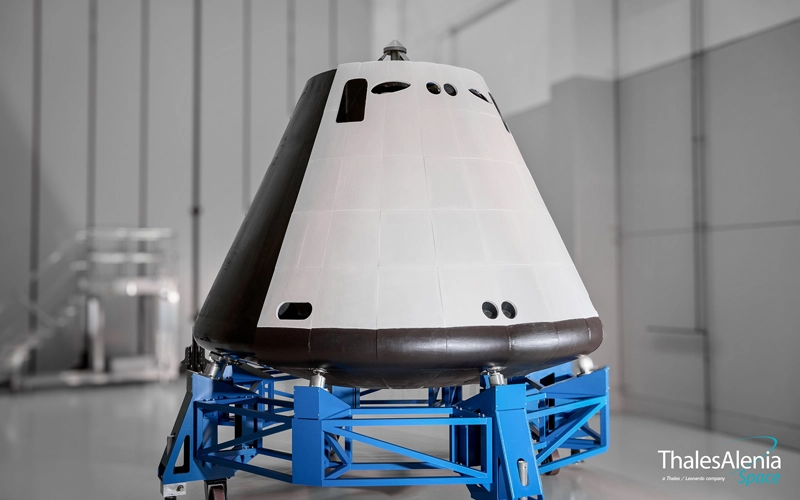
China details its path to a crewed Moon landing before 2030
China has set out its most detailed roadmap yet for landing astronauts on the Moon… The post China details its path to a crewed Moon landing before 2030 appeared first on NASASpaceFlight.com.
China Details Ambitious Roadmap for Crewed Moon Landing by 2030
China has officially unveiled its most comprehensive strategy to date for landing astronauts on the lunar surface, marking a significant milestone in the global race to return humans to the Moon. During the 7th Manned Space Symposium held in Beijing, senior officials from the China Manned Space Agency (CMSA) confirmed that the nation is on track to achieve a crewed lunar landing before 2030. This announcement provides a clear, technical framework for the mission, signaling China's intent to establish a sustained presence in deep space.
The "Two-Launch" Architecture
The core of China’s lunar strategy relies on a "two launches, lunar orbit rendezvous" architecture. Unlike missions that utilize a single massive rocket, China will employ two separate Long March-10 carrier rockets to deliver its hardware to the Moon. One rocket will carry the Lanyue lunar lander, while the second will transport the Mengzhou crewed spacecraft, which will carry a crew of three. Once both vehicles reach lunar orbit, they will perform a rendezvous and docking maneuver. Two astronauts will then transfer into the Lanyue lander to descend to the surface, while the third remains in the Mengzhou capsule to support the mission from orbit.
Technical Readiness and Testing
Development of the necessary infrastructure is already well underway. The program has successfully completed several critical tests, including zero-height abort and maximum dynamic pressure escape tests for the Mengzhou spacecraft, as well as landing and takeoff simulations for the Lanyue lander. According to program designers, the decision to develop the lander and the crew ship separately allows for standardized production and creates a versatile "family" of vehicles that can be adapted for future missions. Before any humans attempt the journey, China plans to conduct uncrewed, end-to-end rehearsals to verify the entire flight sequence, ensuring the safety of the taikonauts.
Impact on the Global Space Industry
This roadmap underscores the intensifying competition and collaboration in the modern space era. By detailing its plans for lunar exploration—which include not only landing astronauts but also potential future resource utilization like extracting oxygen or water from lunar ice—China is positioning itself as a primary architect of the future lunar economy. The transparency provided at the symposium serves to align domestic industry and academic partners, while simultaneously signaling to the international community that China’s lunar ambitions are backed by a robust, nationwide mobilization of resources.
What Comes Next
The path forward involves a series of increasingly complex precursor missions. Before the crewed landing, China will conduct uncrewed test flights of the Long March-10, Mengzhou, and Lanyue systems to prove their reliability in deep space. Once the initial landing is achieved, the program aims to transition from short-term exploration to more prolonged stays, eventually limited by the lunar day-night cycle. As China moves toward its 2030 deadline, the global space community will be watching closely as these test flights begin to bridge the gap between current capabilities and the historic goal of walking on the Moon.
Source: Martin Smith
This article is based on original reporting. Visit the source for more.
Comments (0)
Sign in to join the conversation
No comments yet. Be the first!